
Honour the lifethat shaped yours.
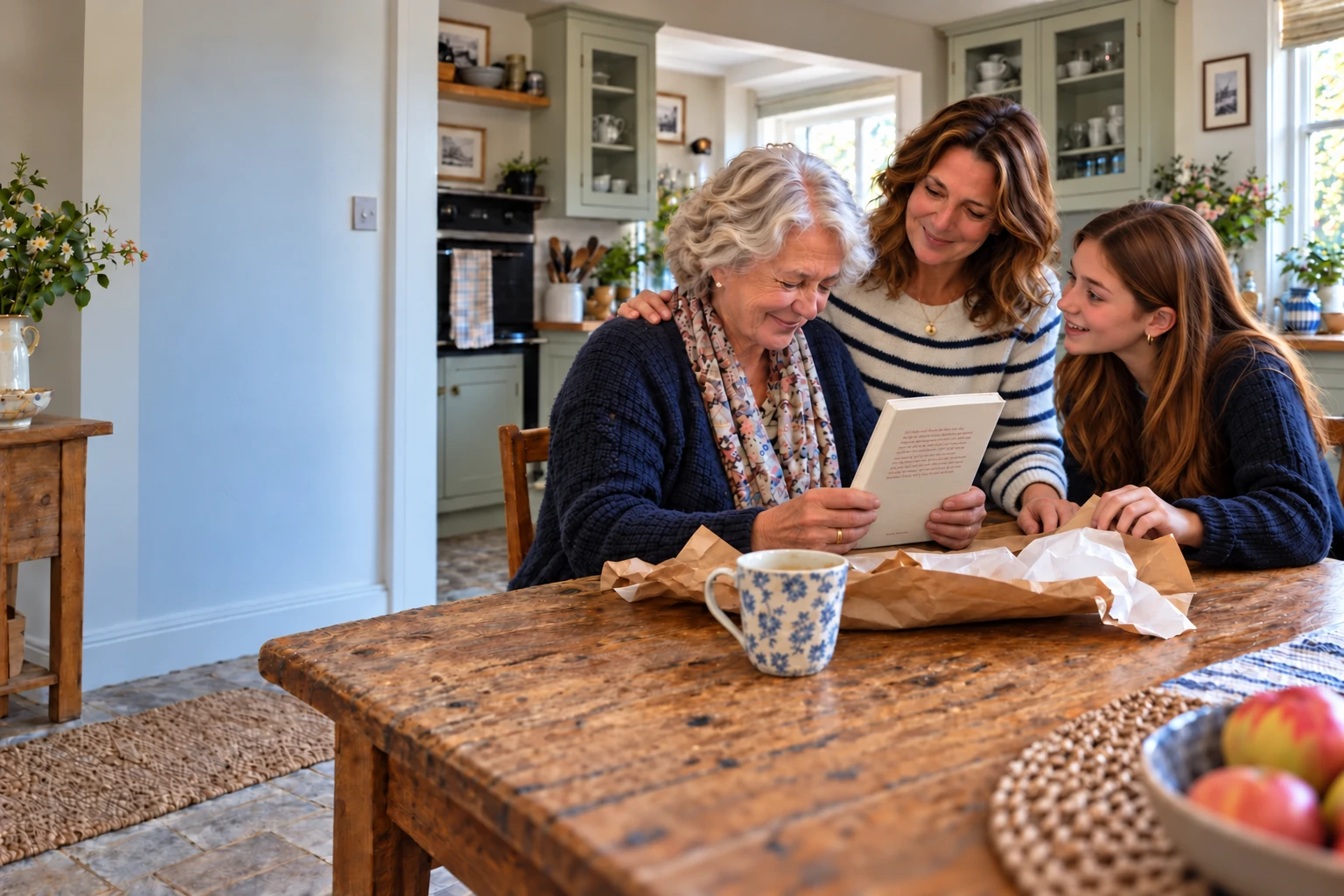
Bring their stories and photographs together in a book your family will keep.
Start your family bookPrivate by default. Yours to keep.
The days we keep
Eleanor Ellis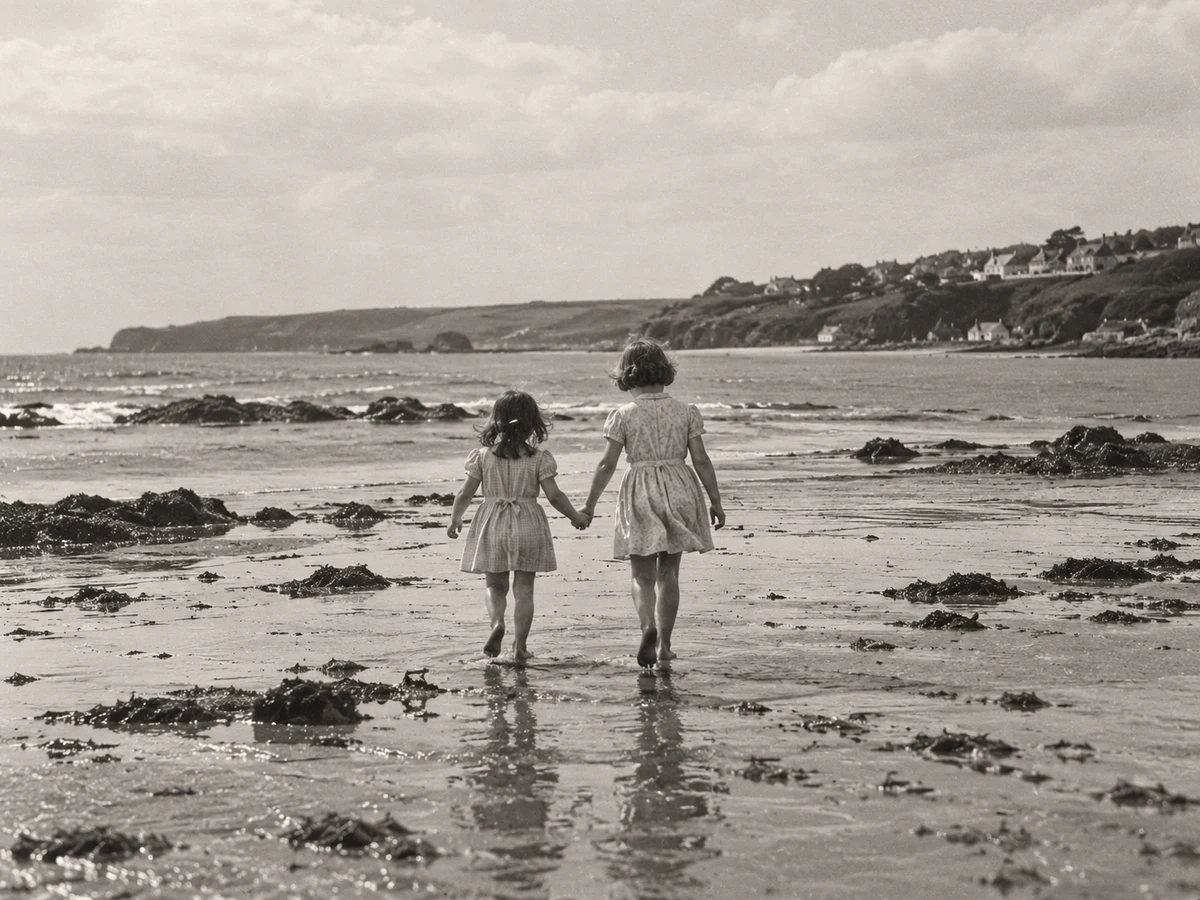
Pages turn automatically. You can also swipe or use the arrow keys.
The days we keep
Eleanor Ellis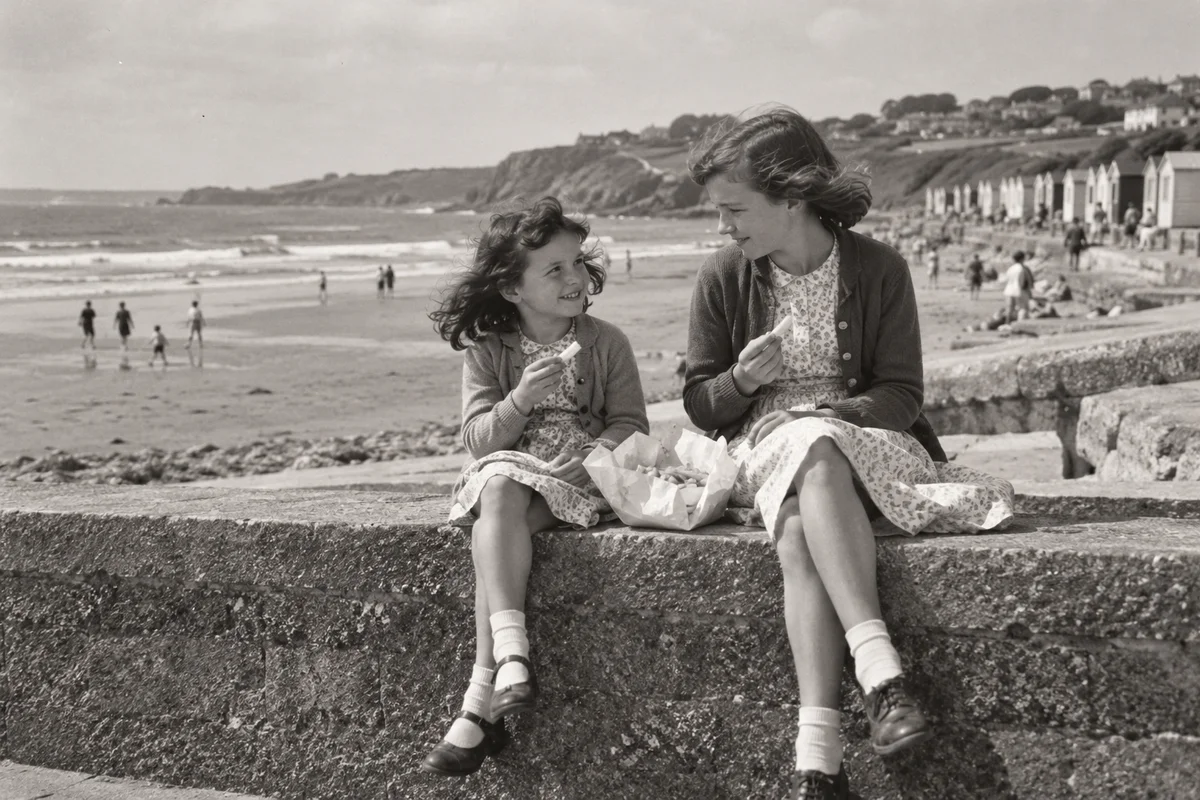
195824
The sea was everything
We never called it a holiday. We called it going down to the sea. Mum packed the sandwiches the night before, and Dad would have us in the car before anyone else on the street had opened their curtains.
My sister always got the window seat. I didn’t mind. By the time we reached the coast, we were both leaning across each other to be the first to see the water.
I can still remember the salt on those chips. And her hand in mine when we ran back down to the beach.
We stayed until the shadows reached our towels. On the way back I slept against my sister, with sand in my shoes and the folded paper from the chips tucked safely into my pocket. At home, Mum shook the last sand from our clothes.
Our front door stuck whenever it rained. Dad said the wood was only doing what wood does, which sounded very wise until you were standing outside with the shopping. There was a little patch of sunlight on the stairs every afternoon. The cat knew exactly when it would arrive.
I could draw that house from memory: the cupboard under the stairs, the good cups nobody used, the kitchen window where Mum kept her cuttings. The rooms were small. In my memory, there was always space for one more person.
On washing days the hallway smelt of damp cotton. We carried the basket between us, bumping it against our knees, while Mum went ahead with the pegs. I remember the weight of it more clearly than I remember the wallpaper. The house was full of small jobs that became company when we did them together.
When I go past now, I still look for the cat in that window. I have to remind myself that other people live there.
Mum never took a list. She said you had to see what was good before deciding what to cook. We came home with apples, a piece of cheese wrapped in paper, and usually something she had stopped to buy for a neighbour. She knew every stallholder by name.
I was allowed to carry the flowers. I held them very carefully, like something important had been entrusted to me. At home she put them in a jug, not a vase, and the whole kitchen looked as though somebody had remembered to be happy.
The walk home took longer than the shopping. There was always someone to stop for, always a question about a child or a mother who had been poorly. I grew impatient beside her. Only later did I understand that this, too, was part of what she had gone out to do.
At the door she would hand me the key and wait behind me. I liked being the one to let us both back in. She trusted me with that small job long before I could reach the lock easily.
There was a quicker route back from school, but we seldom took it. The long way passed a wall where the stones glittered after rain and a gate with a dog who announced our arrival to the whole street. We had names for every landmark.
My sister walked faster than I did. Sometimes she disappeared round a corner and I thought she had left me, but she was always waiting. I think that was our first agreement: she could go ahead, as long as she waited where I could find her.
Once, a shower caught us before we reached the gate. We sheltered under a tree until our socks were soaked anyway, then ran the rest of the way laughing. Mum had towels waiting. For years afterwards, that tree was where the rain had found us, even on the driest afternoons.
We never thought of taking a picture of that walk. It was something we expected to do again the next day, and the day after. We thought we knew every stone along the way, and perhaps we did.
The wireless stood on a shelf above the kitchen table. You had to turn the dial slowly, through the crackling and the voices coming from places I had never heard of. Dad could find his programme without looking, as though his hand remembered the distance.
On Sundays he took the back off and peered inside. I sat beside him and passed things when he asked. I understood almost nothing of what he was doing. I understood that being asked to help was a kind of invitation, and I always said yes.
He kept the screws in a saucer so they would not roll away. Before we finished, he counted them back in, and I counted with him. When the music returned, we sat quite still for a moment. I thought we had made it ourselves, between his patient hands and mine.
Afterwards he put the saucer back in the cupboard. At tea, I watched Mum lay a slice of cake on it without knowing where it had been.
When my sister left home, she wrote on both sides of the paper and down the margins. There was never enough room for everything. She described the people in her office so well that I felt I might recognise them if we passed in the street.
I kept the letters in a biscuit tin. She thought that was funny when I told her, years later. She had forgotten most of what she had written. I had forgotten very little. The envelopes still smell faintly of the drawer in my old bedroom.
At first I answered the same evening. Later there were gaps, when work was busy or I thought I had nothing worth reporting. She never complained. A letter would simply arrive with some tiny detail of her week, and I would find that I had something to tell her after all.
She still rings on Sundays. We say we have nothing new to report, then find ourselves talking until one of us needs to start lunch. There is usually another small thing to say before we put the receiver down.
Mum always left the landing light on until everybody was home. It shone through the frosted glass above the front door. Coming round the corner at the end of an evening, I could see it from halfway down the street.
I did the same thing when I had a house of my own, without ever deciding to. Some habits are handed down so quietly that you mistake them for your own invention. I wonder how many of mine began with her, waiting at the kitchen table.
Even now, I notice lit windows when I walk home after dark. I imagine a cup beside a chair, somebody listening for a key. I cannot know what is happening in those houses. But that small square of light still makes me feel, for a moment, that someone is waiting.
I sometimes caught myself waiting at the same kitchen table. There was usually a crossword there, although I seldom managed more than a clue. I heard the key before I looked up, just as she must have done.
197432
One more dance
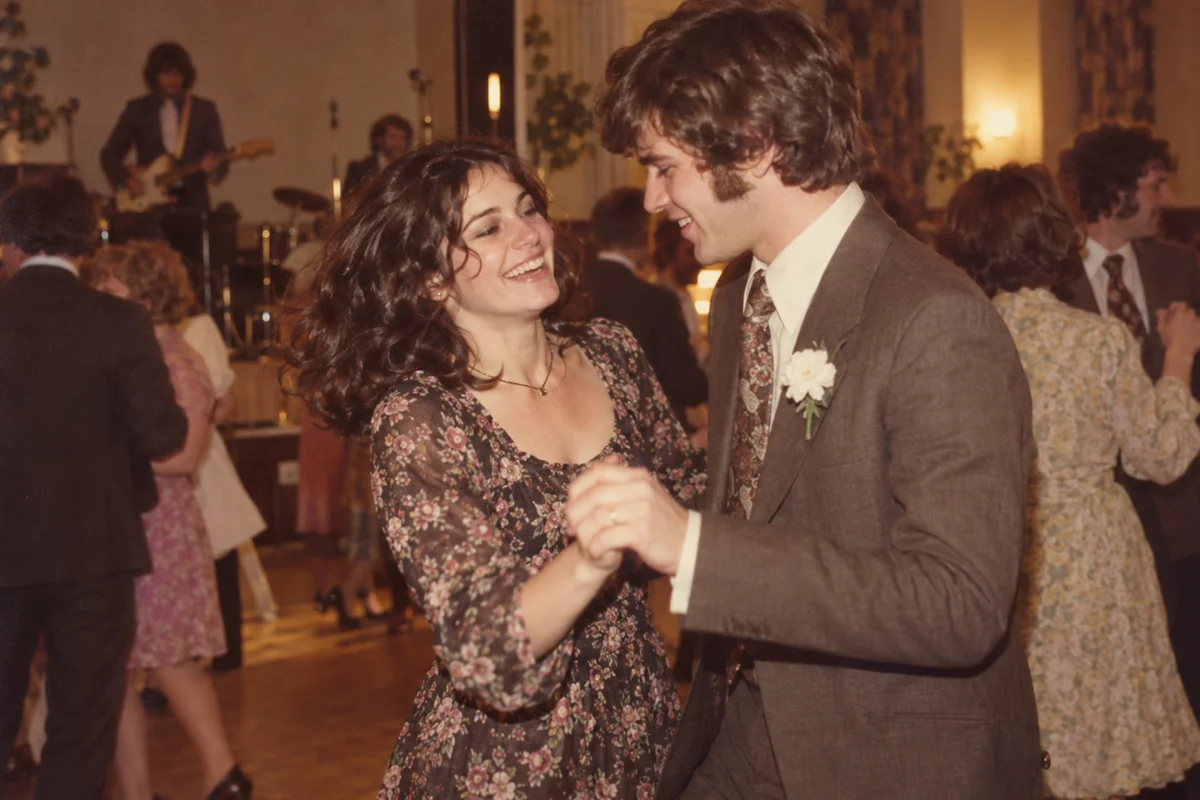
I remember his shirt more clearly than the music. An enormous collar, of course. Everyone had an enormous collar then. He was standing by the doors, holding two drinks and looking as though he might leave.
I asked him to dance. He said he was no good at it. I told him that made two of us, and we spent the next three songs proving it.
For years afterwards, whenever that song came on the radio, he would hold out his hand. Even in the kitchen. Especially in the kitchen.
When the music stopped, neither of us moved towards the door. We stood beside the empty chairs while someone swept the floor, talking about the bus home as if it were a complicated decision. We missed the first one, then walked together to the next stop.
The furniture came from three different relatives and none of it matched. We ate our first dinner sitting on the floor because the table had arrived before its legs. He said it was romantic. I said it would be more romantic with a chair.
We learnt which window let in the afternoon sun and which floorboard complained at night. We put up shelves that leaned slightly to the left. We did not have much, but everything we chose felt like the beginning of a life we were making together.
The first thing we bought together was a blue jug. It was not sensible, with so much else still needed, but we both liked it. We carried it home wrapped in newspaper and put it on the leaning shelf. For a week we found excuses to stand in the doorway and admire it.
It has survived every move. These days it holds wooden spoons, but I still see it sitting alone on that first shelf in the flat. Neither of us ever suggested buying a better one when we had more money.
The recipe card says a good handful, which is not a measurement anyone in my family has ever agreed upon. There is a thumbprint in one corner and a correction in another pen. Mum must have made that cake a hundred times before writing it down.
Mine never came out quite the same. For a long time I thought I was missing an ingredient. Now I think what I missed was standing in her kitchen, listening to the radio, waiting for her to tell me it was cool enough to cut.
I rang her once to ask about the oven temperature. She could not remember; she said she could tell when it was ready by the smell. I left the receiver on the kitchen table while I checked. For those few minutes it was almost as if we were baking together again.
The card lives inside a cookery book now. I turn to it carefully so that the loose corner does not tear any further. There are still a few grains of sugar caught in the fold of the card.
We bought the table second-hand from a man who insisted on telling us every meal his family had eaten around it. I remember thinking we would be there all afternoon. Now I understand why he wanted somebody to know.
There are pencil marks underneath from the children and a pale ring where a hot dish once sat. We talked about replacing it more than once. Then somebody would come for lunch, and we would pull out another chair, and the table would earn its place again.
When we moved, he wrapped the legs separately and labelled them, as though they might forget where they belonged. The table was the first thing we put back together. We ate sandwiches from their paper while the other boxes waited. Already the new room was beginning to feel like ours.
The children know which side has the ring. Nobody needs to tell them where to sit when they bring their own families for lunch.
The snow arrived overnight, and for once nobody had anywhere more important to be than outside. We found gloves that did not match and a hat that was much too big. He took a photograph from the doorway while I tried to find the other boot.
By lunchtime the garden was full of footprints. The snowman leaned towards the fence as if he had something to tell the neighbours. I remember the wet coats in the hall afterwards, and how a room can feel warmer simply because you have come in from the cold.
That evening we dried the gloves along the radiator. They had gone stiff at the fingertips, and one small pair kept falling behind it. The children were tired enough to sit quietly through supper. Outside, the footprints were filling in. Tomorrow there would be school again, but we did not hurry them to bed.
Next morning there was a small carrot on the doorstep.
199238
Our ordinary, lovely days
There were always shoes by the back door. Small ones, muddy ones, a pair nobody admitted belonged to them. I used to think a tidy house was something I would eventually get round to.
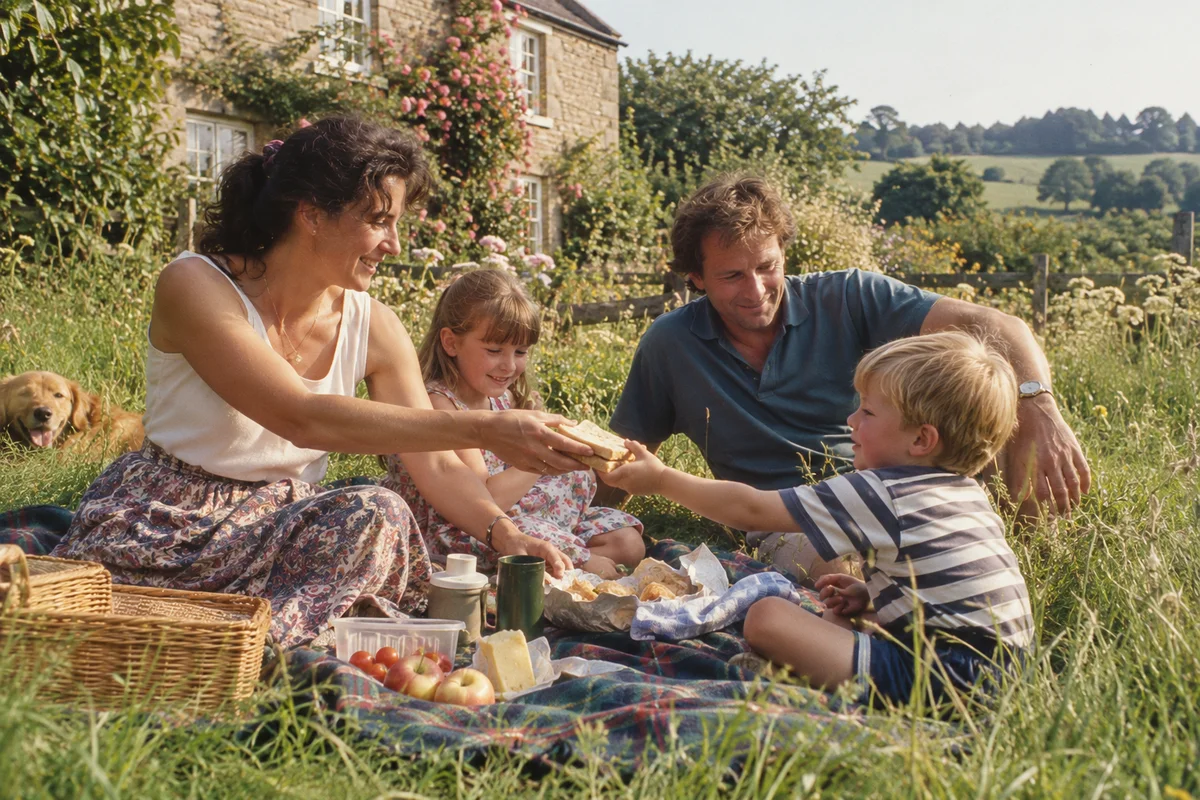
That summer we ate outside whenever we could. The children called it a picnic even if we were only six feet from the kitchen. Everything tasted better on a blanket, apparently.
Looking at the photographs now, it’s the ordinary days I want back. Not to change anything. Just to sit there a little longer.
By evening there would be grass in the hallway and cups left outside. We would go round collecting them together, finding small signs of the afternoon in places we had already forgotten sitting. Sometimes a toy would stay out there until the following morning.
Breakfast was never the peaceful event I imagined it might become. Somebody needed a signature. Somebody had remembered a costume. There was one particular spoon everyone wanted, though I could never see what distinguished it from all the others.
I would give a great deal to hear the noise of that kitchen again. Not a special morning, just an ordinary one. The scraping chairs, the kettle, a question asked twice because nobody was listening. We were all there, and none of us knew that was enough.
On the occasional morning when I was up before everyone, I used to stand with my tea and listen for the first door. I could tell who was coming by the sound on the stairs. I never thought of that as something I knew. It was simply how the day began.
I still have that spoon. I could not tell you whose drawer it came from. It was just there when I began to look.
Most of our best photographs were taken while something else was happening. Somebody reaching for a plate. A child asleep against a shoulder. The back of his head while he explained something with both hands. Nobody was looking at the camera.
I used to put those pictures at the back of the envelope. Now they are the ones I turn to first. They show the life around the occasion: the room as it really was, the people as I remember them, the little things that were never little at all.
There is one with my elbow across half the frame. I was trying to pass the camera back, and somebody pressed the button too soon. Behind me you can see the children under the table. Without that mistake, I doubt I would remember that they had made a den there that afternoon.
They had used my good tablecloth for the roof. I remember being cross about that, though you would never guess it from the photograph. I was still looking for it when somebody handed me the camera again.
He planted the apple tree too close to the fence. We disagreed about it for a whole afternoon, and then the children needed collecting and the argument quietly became part of the garden. The tree has done very well without either of us being proved right.
Every autumn we had more apples than we knew what to do with. There were bags on doorsteps, pies in the freezer, a small procession of people returning empty bowls. A tree is a patient way of giving something away.
He kept a little notebook of what he planted, though he seldom consulted it. I found it when we were sorting the shed. Between the dates and the names were reminders to mend the gate and buy string. So much of a life fits into the margins of something else.
Some of the old ink had faded. We held the notebook up to the window and took turns reading the names and dates aloud. He had pressed so hard that we could feel the words through the paper.
When the children left home, I kept buying the same amount of bread. It took weeks to learn the new quantities. Their rooms were tidier than they had ever been, which was not as satisfying as I had expected.
Then they began to come back with stories of their own. We learnt to listen differently. I stopped asking whether they had eaten and started asking what they had noticed. The house had not finished being a family home. It was simply learning another way to do it.
For a while I left their things exactly where they were. Then one of them came home and asked why I still had that awful poster up. We laughed, and took it down together. It helped to discover that making room for what came next did not mean losing what had been.
The next time they visited, they brought flowers for the room. I put them where the poster had been, on a small table by the bed.
We brought the box down on a rainy afternoon. Inside were photographs, postcards, a theatre ticket, and three things nobody could explain. My daughter wanted to know who had written on the back of one picture. I recognised the handwriting before I recognised the face.
We spread everything across the bed and began making little groups. People, places, guesses. I realised how many of the answers were still in my head, waiting for somebody to ask the right question before they disappeared with all the other ordinary things I had never written down.
We meant to put it all away before supper. Instead we carried on until the light had almost gone, holding the smaller pictures by the window. There were things my daughter remembered differently. We left those photographs between us and talked, rather than deciding that one of us must be right.
There was no room left on the bed.
My granddaughter was very serious about making the tea herself. She asked how long I liked the bag left in, and whether the milk went first, and where we kept the good biscuits. I told her all biscuits were good biscuits if you were sharing them.
She carried the cups carefully, with both hands around the tray. I remembered carrying flowers home from the market at the same age. There are moments when the years seem to fold together, and you can almost see your younger self standing beside the person you have become.
When she had gone, I found a little puddle on the tray and a biscuit she had broken in half for me. I left the washing-up until later. I wanted to sit with my cup a little longer, while the kitchen still felt full of her determined, careful presence.
She asks about the biscuits whenever she calls. I keep a packet aside for her, although she is quite old enough to make her own tea now. I put the cups away afterwards, leaving hers at the front of the cupboard.
I have started writing names on the backs of the photographs. Not just names, but who they were to us. The neighbour who minded the children. The cousin who could make everybody laugh. The friend who always stayed to help wash up.
A name by itself is only the beginning. I want them to know why somebody was in the picture, why we were glad to see them, what the room felt like when they arrived. Those are the things a photograph keeps asking us to remember.
Sometimes I have to ring my sister to check. We spend longer on the telephone than the question needs, moving from one face to another. I write the answer lightly in pencil when we are uncertain. I would rather leave a little space than give the children a certainty we never had.
When I have finished a handful, I leave them out for the family to see. Somebody nearly always remembers another thing I had forgotten to add. I keep the pencil beside the box now, ready for the next visit.
I hope they remember that we made room. That the kettle went on when somebody knocked. That you did not have to bring good news to be welcome. We were not an extraordinary family, but we tried to be kind to one another.
There are things I would do differently, of course. There are conversations I would have again, more slowly. But when I look at these pages, I see a life full of people who mattered to me. I hope they can hear that, in every story I have tried to tell.
There will be parts they remember otherwise. I hope they write those down too. My version is only the view from where I stood: by the stove, at the garden gate, waiting in the car. It matters to me that they know I was glad to be there, even on the days I forgot to say it.
For now, there is still time to tell them. I have left some empty pages at the back, because somebody always remembers something after we think we have finished.
A childhood beside the sea. A dance that began a life together. The ordinary days that became our favourite memories. These are Eleanor’s stories, gathered for the people who will carry them on.
Golden RecordThree ways to
tell the story.
Start wherever feels right.
First person or third. Always yours to edit.
Start a conversationEleanor, in conversation“He was holding and looked .”
Choose a detail to follow.
AI biographerHe looked ready to leave. What made you walk over?
Eleanor“That enormous collar. I asked him to dance. He said he was no good. I told him that made two of us.”
In the book
One more dance.
I asked him to dance. He said he was no good at it. I told him that made two of us, and we spent the next three songs proving it.
Their voice.
Their photographs.
A book of their life.
The big days and the ordinary Tuesdays. In their own words, with the photographs that bring it all back.
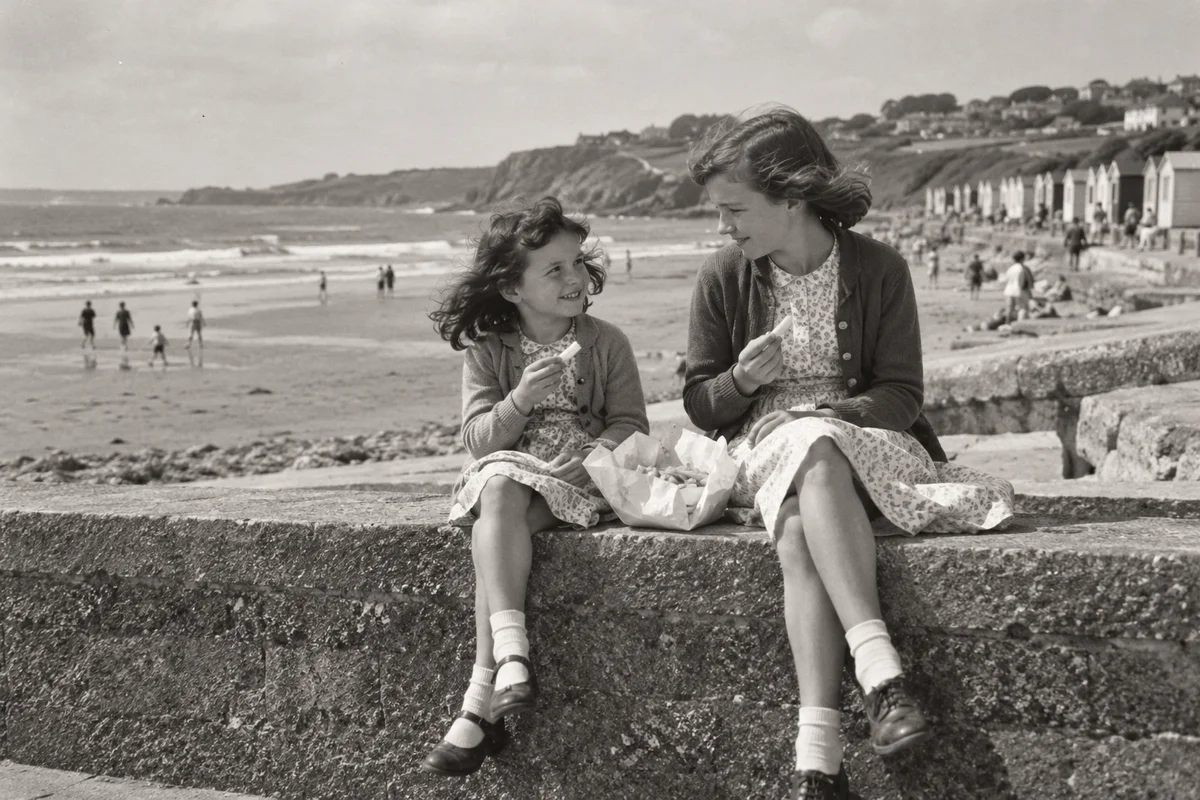
Me and my sister, with the whole summer ahead of us.
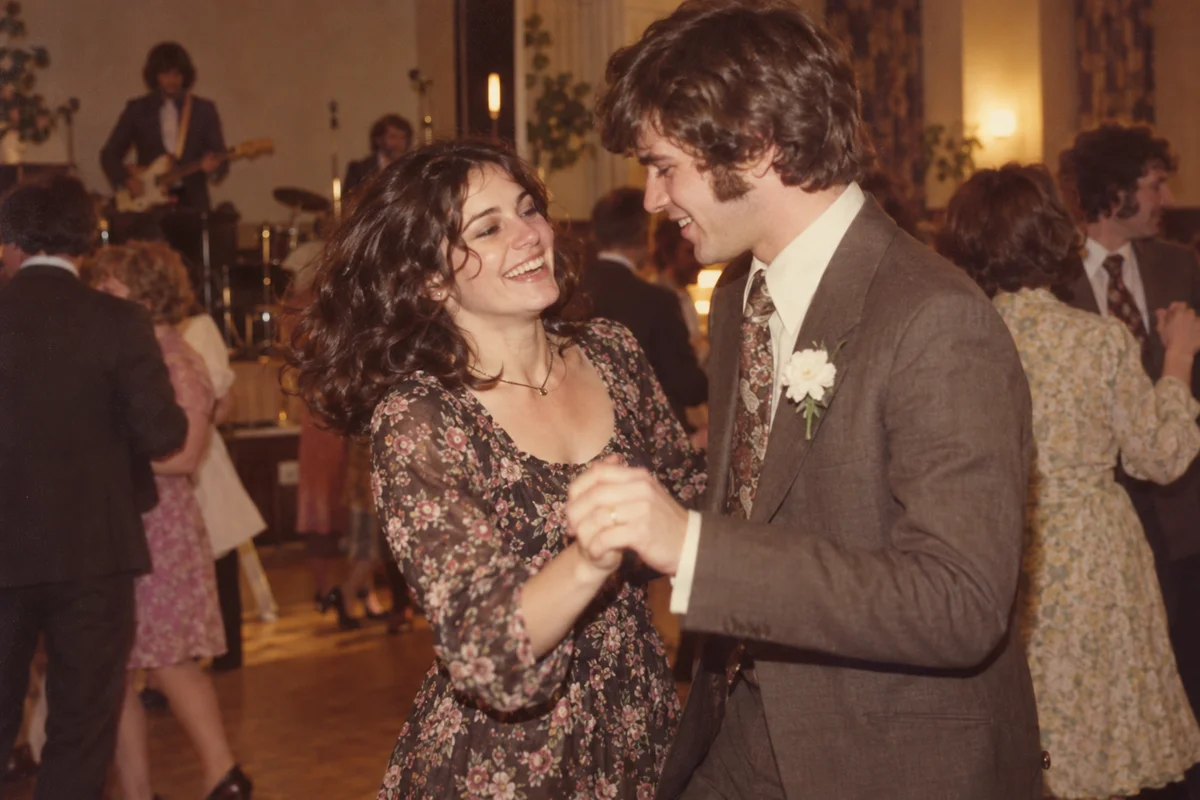
He said he couldn’t dance. I asked him anyway.
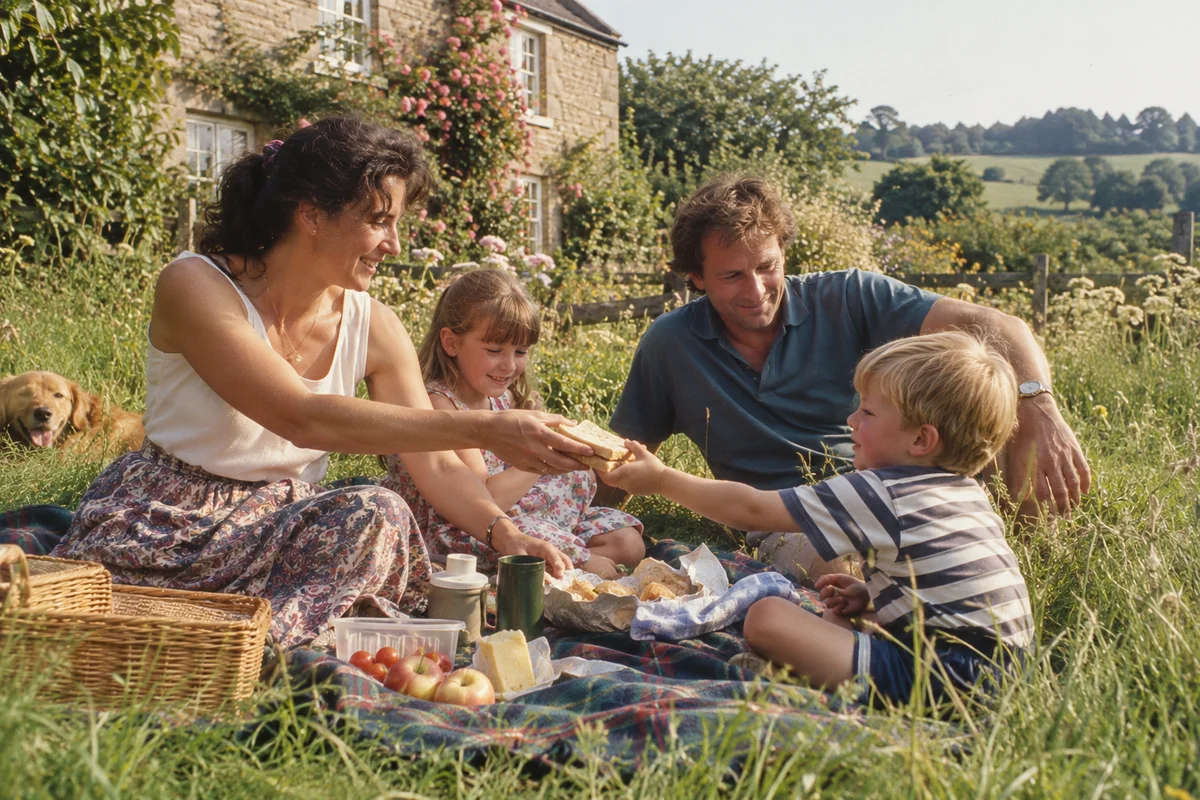
Nothing special was happening. That was the lovely thing.
Their story.
Your say.
The words, the photographs, the finished edition. You decide what belongs.
What your family keeps- Keep their way with words.
- Edit every chapter. Keep the humour, the expressions, the details only they would remember.
- Make room for every voice.
- Invite family to add photographs, names and stories that fill the gaps.
- Keep the voice behind the page.
- The original recordings stay with your family archive. The book gives them another way to be heard.
Before you begin.
Do we need to have everything ready?+
No. Have a conversation with AI or your own prompts, upload audio you already have, or write the story yourself. Add memories and photographs as you go.
Can I change the writing and design?+
Yes. Choose first- or third-person writing, review and edit every chapter, arrange your photographs, choose the cover, and check a PDF proof.
Can we get a printed book?+
You can create and download your book now. Physical printing is currently available through a private pilot.
Show them what they mean to you.
Start with one memory.
Make something your family will keep.