
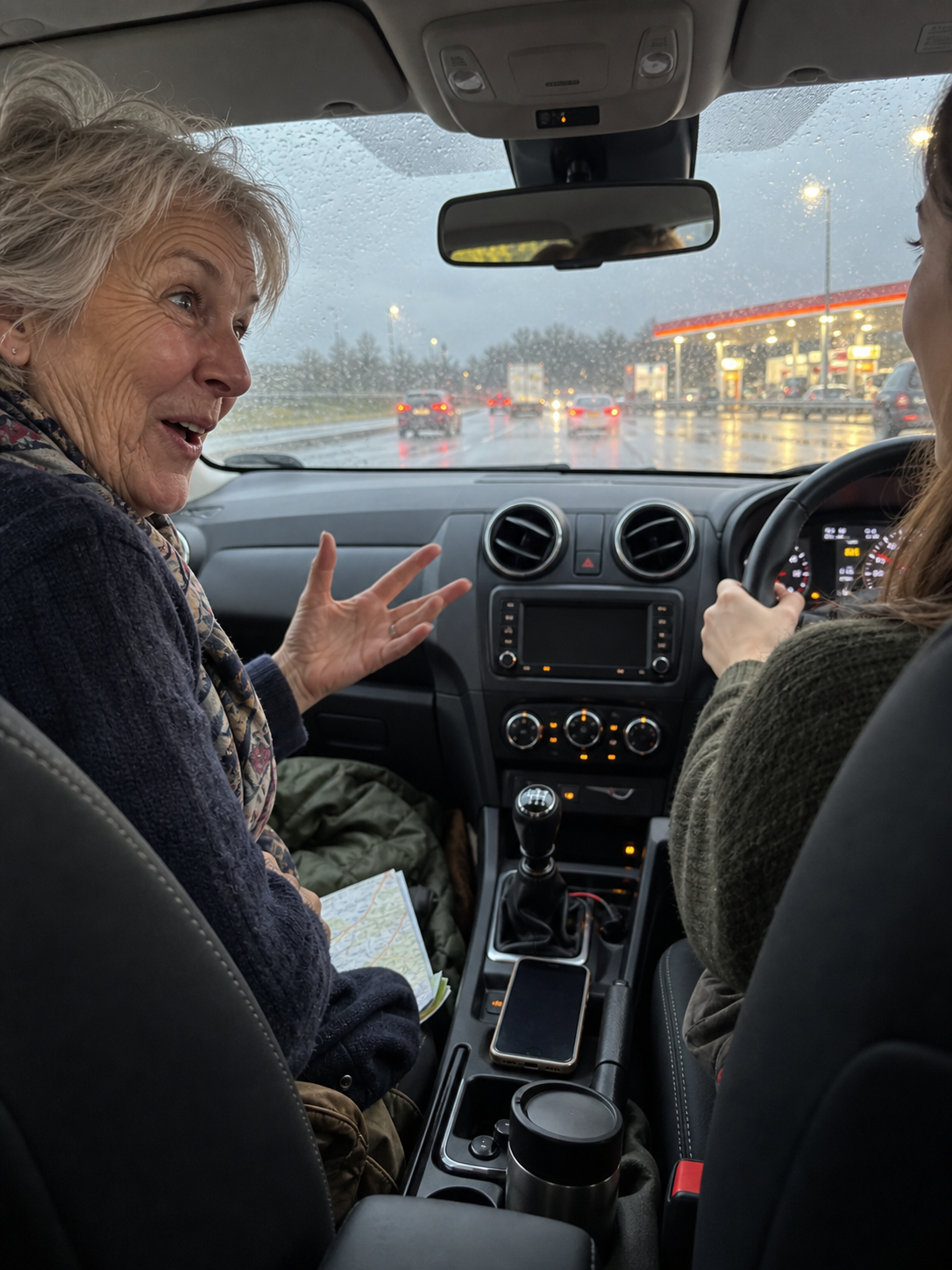
Good questions do not demand a perfect life story. They offer a door into one. Pick a handful that suit the person and the day; the best follow-up is usually ‘tell me more about that.’
Childhood and home
Ask about the world that made them before you ask about the milestones. These questions tend to bring back sensory, surprising memories.
- What was your neighbourhood like?
- What was always in the kitchen?
- Which adult did you most want to impress?
- What mischief did you get away with?
- What did you believe was possible for your life?
- What did you do when no one was telling you what to do?
Love, friendship, and family
Keep the tone curious rather than investigative. Not every question has to be answered, and the option to pass makes deeper answers more likely.
- How did you meet the people who became your closest friends?
- What made you laugh hardest with your siblings?
- How did you know you were in love?
- Which family tradition would you keep forever?
- Who taught you how to be brave?
- What do you appreciate about our family now?
Work, change, and the choices that mattered
Ask about uncertainty as well as achievement. A life becomes more useful to the next generation when it includes the wrong turns, the waiting, and the resilience.
- What was your first job really like?
- When did you feel most capable?
- What did you have to learn the hard way?
- What did you change your mind about?
- What risk are you glad you took?
- What would you tell yourself at twenty-five?
Legacy and everyday wisdom
Leave space for the practical wisdom that often never makes it into a family photo album.
- What do you hope people remember about you?
- What have you learned about a happy home?
- What do you want your grandchildren to know?
- What small thing still brings you joy?
- Which story do you never want our family to lose?
- What would you like to ask me?
Questions people ask
What are the best questions to ask parents?
The best questions are specific, open-ended, and connected to something they care about. Start with childhood, home, and a familiar object or photo.
How do I avoid awkward questions?
Say why you are asking, make passing acceptable, and do not treat silence as a failure. You can always come back to a subject later.
Sources and guidance
We use practical guidance from oral-history and digital-preservation organisations when creating these resources. These links are a good next step for anyone creating a more formal public or archival project.